
The bench allowed the rejoinder affidavit to be filed by petitioners in two weeks thereafter and posted the matter for final hearing in January, 2025.
One of the resolutions uploaded on the apex court website said a vacancy in the office of the chief justice of the Uttarakhand high court has arisen consequent upon retirement of Justice Vipin Sanghi on October 26, 2023.

The Supreme Court of India has granted interim police protection to Discovery Communications India officials who have been receiving threats from followers of self-styled godman Asaram Bapu. The threats were triggered by the release of a documentary series titled "Cult of Fear: Asaram Bapu". The court has directed the Centre and several state governments to ensure the safety of the petitioners, including their offices.

Instant 'triple talaq', also known as 'talaq-e-biddat', is an instant divorce whereby a Muslim man can legally divorce his wife by pronouncing 'talaq' three times in one go.
A bench of Justices B R Gavai and Augustine George Masih observed it was pained to say that some of the observations made in the high court order depicted total insensitiveness and an inhuman approach.

Quraishi asserted that India has, is and will always stand up and fight for its constitutional institutions and principles.

The West Bengal Board of Secondary Education (WBBSE) has appealed to the Supreme Court to modify its order annulling over 25,000 jobs in schools. The board argues that the termination of 11.3% of existing teachers would have a devastating impact on schools in the state and impact the education of over 78.6 lakh students. The WBBSE is seeking to allow untainted candidates to continue in service until the end of the academic year or until the process of fresh appointments is concluded, whichever is earlier.
The views came in the wake of Vice President Jagdeep Dhankhar wondering on Friday that how could the CJI, even by "statutory prescription", get involved in executive appointments such as that of Central Bureau of Investigation director, and said it was time to "revisit" such norms.

The Supreme Court of India has ruled that the secular nature of the state does not prevent it from interfering with religious practices and attitudes when they impede development and the right to equality in the larger public interest. The court dismissed pleas challenging the 1976 amendment to the Constitution, which added the terms "socialist", "secular", and "integrity" to the Preamble, stating that Parliament's amending power extends to the Preamble as well.

The State Bank of India, which unsuccessfully sought extension of time till June 30 to disclose the details of electoral bonds, on Monday faced searching questions from the Supreme Court which wanted to know about the steps taken to comply with the directions it had issued while scrapping the controversial scheme of anonymous political funding on February 15.

Chastising the State Bank of India, the Supreme Court on Monday ordered it to disclose the details of the electoral bonds encashed by political parties to the Election Commission by the close of the business hours on March 12 and warned the country's largest public sector lender that the court may proceed against it for 'wilful disobedience' if it failed to comply with its directions and deadlines.

The Indian government has claimed a significant increase in waqf land following the 2013 amendment to the Waqf Act, asserting that the addition of 20 lakh acres raises concerns about potential "misuse" of the provisions. In an affidavit to the Supreme Court, the Centre highlighted a 116% rise in auqaf area after the amendment and urged the dismissal of petitions challenging the Act's validity.

"Liberty is granted to newly-added respondents (states) to file a response within 15 days from the date of service, and rejoinder if any be filed after 15 days. The interim order to continue and will equally apply to the cases mentioned in the amended writ petition. We direct no further cases be registered without the permission of this court," the bench's order said.
In a significant development, the Supreme Court on Tuesday asked the Election Commission of India to provide details of cases in which it had either removed or reduced the period of disqualification from electoral rolls of leaders post their conviction in criminal cases.
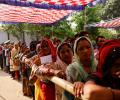
"The voter turnout data for the first two phases of the ongoing 2024 Lok Sabha elections published by ECI on April 30 has been published after 11 days of the first phase of polling... on April 19 and four days after second phase of polling... on April 26.
A bench of Justices Sanjiv Khanna and Dipankar Datta gave liberty to petitioners Internet Freedom Foundation and Criminal Justice and Police Accountability Project, who had jointly filed the petition, to approach the high court.

The Supreme Court of India has transferred a Public Interest Litigation (PIL) concerning the safety and longevity of bridges in Bihar to the Patna High Court. The court expressed concern over the state government's handling of bridge collapses, noting that officials were suspended after incidents but reinstated after the public outcry subsided. The court also criticized the state's voluminous response to the PIL, which lacked explanations for the collapses. The Patna High Court will now monitor the state's efforts to ensure structural and safety audits of bridges in Bihar.
Justice Khanna said all the intervention applications filed on the issue will also be taken on April 16 when the final hearing will take place.
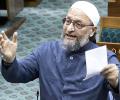
The Supreme Court on Thursday agreed to consider a plea of All India Majlis-e-Ittehadul Muslimeen (AIMIM) chief Asaduddin Owaisi seeking the implementation of the 1991 places of worship law, which asks to maintain the religious character of a place as it existed on August 15, 1947.

The Supreme Court has adjourned pleas challenging the appointments of the chief election commissioner (CEC) and election commissioners (ECs) under the 2023 law. The court indicated the matter would be listed after the Holi festival break due to a paucity of time. Petitioners, including the NGO Association for Democratic Reforms, argued for an urgent hearing, emphasizing the importance of the issue and the potential impact on democratic processes. The appointment of the new CEC and ECs under the 2023 law, which excludes the Chief Justice of India from the selection panel, has been a point of contention, with petitioners alleging it undermines the independence of the election commission.
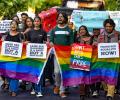
A five-judge bench of the Supreme Court will consider review pleas challenging the October 2023 verdict that declined legal sanction to same-sex marriage. The review pleas will be heard in chambers on January 9, with Justice P S Narasimha being the only member of the original bench that delivered the verdict.

Article 370 of the Constitution, which bestowed special status on the erstwhile state of Jammu and Kashmir, was a 'temporary provision' and any interpretation of the provision cannot postulate that integration of J-K with India was temporary, the Supreme Court ruled on Monday.

Podcaster Allahbadia's remarks on parents and sex on comedian Samay Raina's YouTube show 'India's Got Latent' triggered a controversy and several FIRs have been lodged against him and others in various parts of the country.
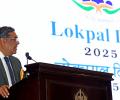
The Supreme Court of India will examine the jurisdiction of the Lokpal, India's anti-corruption ombudsman, in entertaining complaints against sitting high court judges. The court is considering a suo motu proceeding initiated over the Lokpal's January 27 order on the issue. The case involves two complaints filed against a sitting additional judge of a high court, alleging that he influenced a judge of the subordinate judiciary and a judge of the same high court set to deal with a suit filed against the complainant by a private company.
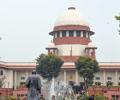
The Supreme Court on Thursday dismissed a batch of pleas seeking to review its October 2023 verdict declining legal sanction to same-sex marriage.
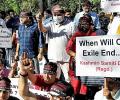
A British MP has tabled a parliamentary motion in the House of Commons to commemorate the 35th anniversary of the "genocide of Kashmiri Pandit Hindus from Jammu and Kashmir in India." The motion, which calls for recognition and justice for the events of January 1990, has been met with support from other MPs. The motion condemns the attacks on the Hindu population of Kashmir Valley and calls for the Indian government to enact a bill to punish the perpetrators.

A bench of Justices Sanjiv Khanna and Dipankar Datta stayed the implementation of the December 14, 2023, order by which it had agreed to the appointment of a court commissioner to oversee the survey of the mosque premises which, the Hindu side claims, hold signs suggesting that it was a temple once. However, the apex court made it clear that proceedings before the high court in the dispute including the maintainability of the suit under Order 7 Rule 11 of the Civil Procedure Code (CPC) will continue.

The Act prohibits conversion of any place of worship and provides for the maintenance of the religious character of any place of worship as it existed on August 15, 1947.
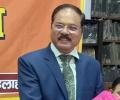
Justice Shekhar Kumar Yadav, an Allahabad High Court judge, is set to appear before the Supreme Court Collegium to explain his controversial statements made at a Vishva Hindu Parishad (VHP) function. The Supreme Court has sought a report from the Allahabad High Court after news reports surfaced regarding Justice Yadav's remarks, which were widely condemned as "hate speech". The judge's statements, made at a VHP event, sparked outrage from various quarters, including opposition leaders and lawyers. The Bar Association of India has also condemned the judge's remarks and called for an apology.
The Mathura Shahi Masjid Eidgah Committee has approached the Supreme Court, requesting the court to prevent the central government from filing a response to a petition challenging the Places of Worship Act's constitutional validity. The committee accuses the BJP-led government of intentionally delaying its response. The court had previously issued a notice to the government in March 2021, but the government has yet to submit its reply despite numerous opportunities. The committee argues that the government's delay is intended to obstruct those opposing the challenge to the Places of Worship Act from filing their own responses. The petition also states that the pleas challenging the law's validity are scheduled for hearing on February 17, and closing the government's right to respond would serve justice. The Supreme Court previously issued a ruling in December 2022 that stopped courts from entertaining new lawsuits or issuing interim or final orders regarding the reclaiming of religious places, particularly mosques and dargahs. The ruling halted proceedings in 18 lawsuits filed by Hindu groups seeking surveys to confirm the original religious character of 10 mosques, including the Gyanvapi Masjid in Varanasi, the Shahi Idgah Masjid in Mathura, and the Shahi Jama Masjid in Sambhal. This decision was made in response to six petitions, including one filed by lawyer Ashwini Upadhyay, challenging various provisions of the Places of Worship Act. The 1991 law prohibits the conversion of places of worship and guarantees the preservation of their existing religious character as it stood on August 15, 1947. Notably, the dispute regarding the Ram Janmabhoomi-Babri Masjid in Ayodhya was excluded from this law. There are also several cross-petitions advocating for a strict enforcement of the 1991 law to uphold communal harmony and maintain the current status of mosques that Hindu groups seek to reclaim, claiming they were temples before being destroyed by invaders.
The Supreme Court on Monday agreed to consider listing for urgent hearing the petitions challenging the constitutional validity of the Waqf (Amendment) Act, 2025.

The Supreme Court has agreed to examine a PIL alleging that Arunachal Pradesh Chief Minister Pema Khandu awarded government contracts to his family members. The court has asked the state government to provide details of the beneficiaries and inform if due process was followed. The bench also sought responses from union ministries of home affairs, finance and the Comptroller and Auditor General of India on the issue within five weeks.
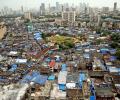
The Supreme Court of India has refused to halt the redevelopment project of Dharavi in Mumbai, allowing the Adani Group to proceed with their project. The court rejected a plea from Seclink Technologies Corporation, the original highest bidder for the project in 2018, which challenged the tender process and the award to Adani Properties Pvt Ltd in 2022. The court directed Adani Properties to make payments through a single bank account and ordered Seclink Technologies to file an affidavit detailing their increased offer for the project. The project work has already commenced, with constructions underway and 2,000 people employed on the site.
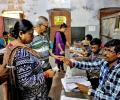
The Supreme Court of India has asked petitioners in two Public Interest Litigations (PILs) to make representations to the Election Commission of India (ECI) regarding their demand for uploading polling booth-wise voter turnout data on the ECI website. The PILs, filed by TMC MP Mahua Moitra and NGO Association for Democratic Reforms, seek a direction for the ECI to upload the data within 48 hours of the conclusion of polling in Lok Sabha and assembly elections. The ECI, represented by senior advocate Maninder Singh, expressed willingness to deliberate on the matter and suggested a meeting with the petitioners to address their concerns. The court has adjourned the hearing to the week of July 28.
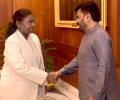
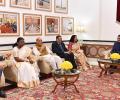
Speaking at the banquet she hosted in President Dissanayake's honour, President Murmu said Sri Lanka is an important part of India's 'Neighbourhood First' policy and New Delhi would continue to support Colombo's efforts for economic development.
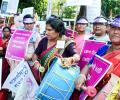
The Supreme Court has allowed the parents of the RG Kar Medical College rape and murder victim to pursue their plea for a further court-monitored CBI probe into the incident before the Calcutta High Court. The parents had expressed dissatisfaction with the CBI's initial probe and sought a more thorough investigation. The court, without making comments, disposed of the application, allowing the parents to continue the proceedings before the high court. The case has also prompted the Supreme Court to consider recommendations for preventing gender-based violence and developing safety protocols for medical staff at hospitals across the nation.
The Supreme Court came down heavily on the Centre on Tuesday for failing to take any decision for years on the pension payable to retired regular captains of the Army in accordance with the One Rank One Pension (OROP) scheme and imposed a fine of Rs 2 lakh on it.
Four days after the top court cleared 10 bills, which were stalled and reserved by Tamil Nadu Governor R N Ravi for the president's consideration, and set a timeline for all governors to act on the bills passed by the state assemblies, the judgement running into 415 pages was uploaded on the apex court's website at 10.54 pm on Friday.
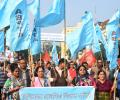
The Supreme Court of India has invalidated the appointment of 25,753 teachers and other staff in West Bengal's state-run and state-aided schools, deeming the selection process "vitiated and tainted." The court ordered the state government to conduct a fresh selection process within three months. The decision comes after a Calcutta High Court verdict in April 2024, which also annulled the appointments. The apex court, while upholding the high court's order, made some modifications, including exempting disabled employees from returning their salaries. The case stemmed from alleged irregularities in the 2016 recruitment process by the West Bengal School Service Commission (SSC), involving OMR sheet tampering and rank-jumping. The Supreme Court had previously termed it a "systemic fraud." Former West Bengal education minister Partha Chatterjee and Trinamool Congress MLAs Manik Bhattacharya and Jiban Krishna Saha are among the accused being investigated in the recruitment scam.

The Centre on Thursday assured the Supreme Court that it will neither denotify Waqf properties, including "Waqf by user", nor make any appointments to the central Waqf council and boards till May 5.
